| Route | Amman → Petra → Wadi Rum → Aqaba, 10 days |
| Overall verdict | Manageable and often genuinely comfortable |
| Biggest friction | Occasional catcalling, male-dominated market streets |
| Best move | Modest dress + Careem app + firm “la, shukran” |
| Wadi Rum tip | Book a women-run or well-reviewed camp in advance |
Why I went alone
I had been planning a Jordan trip with a friend for two years. She canceled six weeks before departure. I could have delayed again, or found another travel partner, or refunded everything and chosen somewhere easier.
Instead I went alone.
This is the account of 10 days solo in Jordan as a woman in April 2024. I am being honest about the uncomfortable parts — the moments that required more assertiveness than I typically need in Europe — because I think sanitized “Jordan is totally fine!” accounts are not actually helpful. Neither are alarmist “Middle East is dangerous for women” takes that bear no relationship to the reality on the ground.
The short version: I would go back. I would go back alone. Jordan is manageable, often genuinely comfortable, and occasionally uncomfortable in ways that have more to do with cultural difference than with actual danger.
Amman: first impressions and practical reality
I landed at Queen Alia International Airport at night, which I had been slightly nervous about. I had pre-booked a taxi through my hotel (Careem works from the airport, but the first-night logistics of a new country feel easier with a pre-arranged driver). The drive into Amman at midnight was smooth. Check-in at the guesthouse on Rainbow Street took five minutes. The neighborhood was quiet but clearly alive.
Rainbow Street deserves its reputation. It is one of Amman’s genuinely cosmopolitan corridors — cafes, restaurants, a mix of locals and visitors, plenty of women walking alone or in small groups. I spent two evenings there without a moment of discomfort.
The downtown medina is different. The Souk Al-Bukhariyya area and the market streets around the Roman Theatre are more male-dominated spaces, particularly in the evening. I visited in the afternoon without issue but felt more conspicuous than I had on Rainbow Street. Modest dress (I was wearing loose trousers and a long-sleeved top, no headscarf) helped. I did attract a few second glances and one verbal comment that was not exactly welcoming, but nothing escalated.
For daytime sightseeing — the Citadel, the Roman Theatre, the National Archaeological Museum — I was treated with professional politeness everywhere. Ticket sellers, security staff, museum guides. No issues.
Practical Amman note for solo women: The Careem app is essential. Do not hail unmarked taxis on the street, particularly at night. Order a Careem or ask your accommodation to call a licensed taxi. The difference in confidence this gives you is worth the slight extra cost.
For the wider safety picture beyond my own experience, our is Jordan safe guide covers crime statistics, common scams, and region-by-region context.
Petra: unexpectedly comfortable
I was most nervous about Petra. Every account I had read mentioned aggressive hawking at the entrance and pressure from horse and donkey handlers inside the Siq. All of this is true.
What I found is that it was manageable with clear body language and a single learned phrase. “La, shukran” — no, thank you — said firmly and without eye contact breaks most approach cycles. I was asked maybe 30 times over two days if I wanted a horse/donkey/camel/guide. I said no 30 times. That was it.
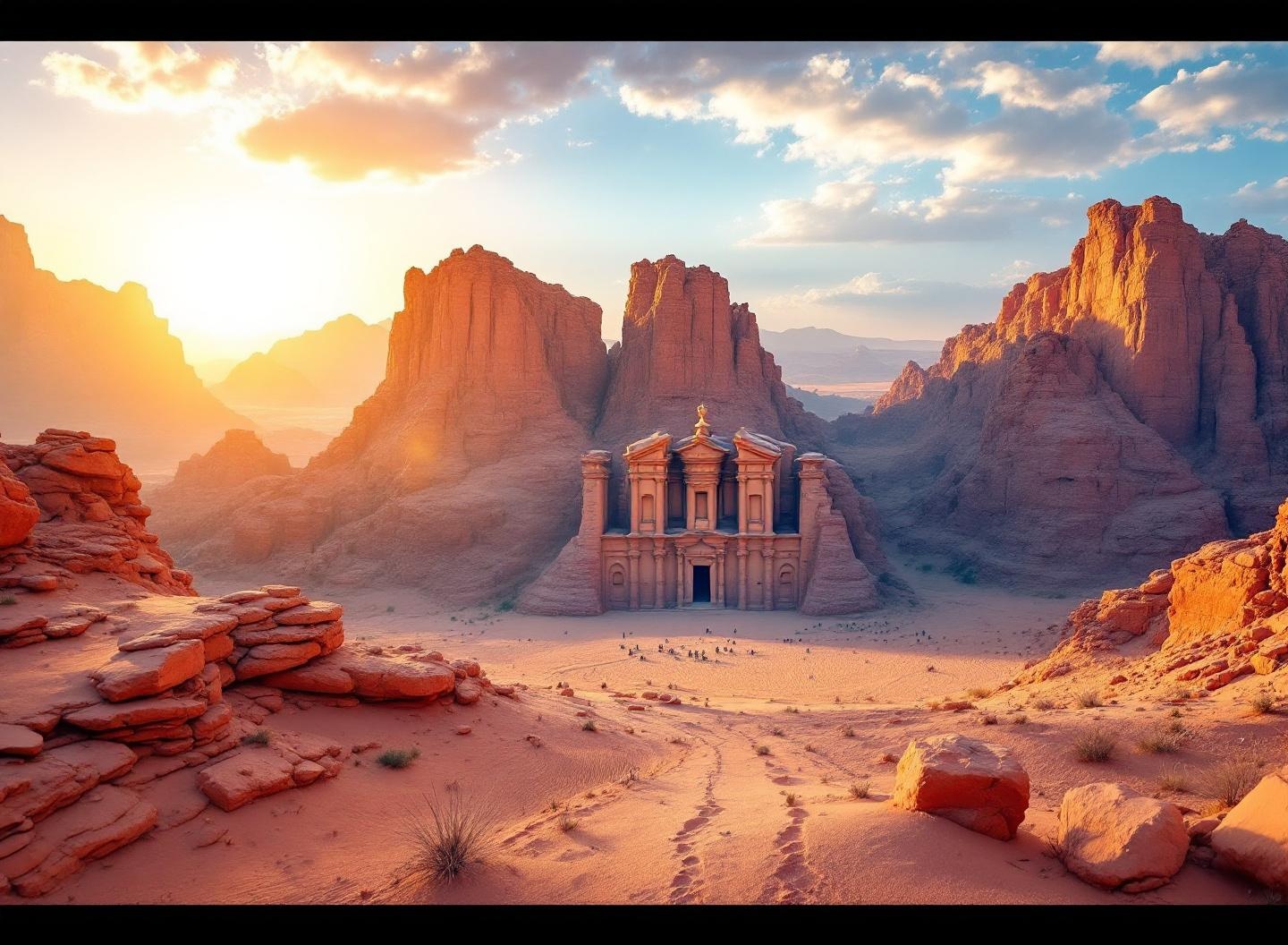
The Petra experience itself — the Siq, the Treasury, the Monastery climb, the High Place of Sacrifice — is magnificent solo. I moved at my own pace, stopped where I wanted, ate lunch at the basin restaurant when I was hungry rather than when a group itinerary dictated. Solo travel in a physically spread-out site like Petra is, counterintuitively, very comfortable.
I stayed two nights in Wadi Musa, which allowed me two full Petra days with the Jordan Pass. I booked a hostel with a female dorm (around 15-18 JOD per night) and found good company among other solo female travelers. Wadi Musa’s small town — the streets near the Petra visitor center — felt fine to walk in the evening, though I stuck to the main road and was back at the hostel by 9pm.
The one uncomfortable Petra moment: A vendor in the Siq walked alongside me for about 10 minutes despite multiple clear rejections. Not threatening — just relentlessly persistent. I eventually stopped, turned, and said “I will call security if you don’t leave me alone.” He left immediately. I mention this not to alarm but to illustrate that knowing you have options (there is security presence inside the Siq) helps.
From Wadi Rum: jeep tour with overnight desert campingWadi Rum: genuinely female-friendly (with some caveats)
I had done research before choosing my Wadi Rum camp, and I specifically looked for camps with women-owned or women-run operations, or those with strong solo female traveler reviews.
I ended up at Memories Aicha camp, which came highly recommended on several women’s travel forums. It was the right call. The owner, a Bedouin woman named Aicha, runs the operation with her family. The camp has mixed clientele — couples, groups, some solos — but the presence of a woman in charge of the space changes the dynamic noticeably. I felt safe and genuinely welcomed.
The jeep tours themselves (full-day with a male Bedouin guide) were entirely comfortable. Our guide was professional, proud of his landscape, and clearly well-practiced with international visitors. We talked about his family, his knowledge of the desert geography, and his opinion on the film crews that regularly use Wadi Rum. No discomfort.
The stargazing at night — sitting outside the tent on a mat with tea — was one of the most peaceful moments of the trip. I was alone under the stars in the Wadi Rum desert. I was completely fine.
Caveat on camps: Research before booking. Not all camps are equal in their treatment of solo female travelers. Stick to well-reviewed operations with an international reputation. The 80-150 USD mid-range bracket generally offers more professional operations than the 30-40 USD budget end, though exceptions exist in both directions. Our Wadi Rum Bedouin camp experience piece covers what a typical overnight actually involves if you want more detail before booking.
Aqaba: the beach question
Aqaba is Jordan’s beach city, and the beach question is real for female travelers. Jordan is a conservative Muslim country, and the public beach culture reflects that.
At the public beaches near the South Beach area, most Jordanian women swim in full coverage — abaya or modest swimwear. As a Western visitor, I wore a one-piece swimsuit at the public beach and felt moderately conspicuous (a few stares) but not unsafe. At the resort-linked beaches (the Mövenpick, Kempinski), international swimwear norms are entirely normal and no one blinks.
My recommendation: if you want bikini-comfortable beach time, book a day use at one of the resort beaches (10-15 USD, often includes a towel and sun lounger). If you’re at a public beach, a one-piece or rash guard is the path of least friction.
The Red Sea snorkeling from a boat is incredible and clothing is not an issue on private tour boats.
Women-led food tour through Amman's culinary sceneThe catcalling question
It happens. Not constantly, not everywhere, but it happens.
I experienced it primarily in male-dominated urban areas — parts of downtown Amman, some streets in Wadi Musa — and occasionally at tourist sites from younger vendors. The comments were usually verbal and non-threatening: “hello,” “you’re beautiful,” “where are you from?” delivered in a context that made their intent clear.
My approach: headphones in (whether playing music or not), no eye contact, purposeful walking pace. This eliminated 90% of approach attempts before they started.
I am reluctant to be too definitive about catcalling because experiences vary dramatically by time of day, area, dress, and individual traveler. Other solo female travelers I met in Petra reported no incidents over several days. A friend who visited Amman’s conservative Shmeisani area at dusk had a more frustrating experience. Context matters. For a broader, more recent read on the general safety picture across the country, see our current Jordan safety update.
What I can say clearly: catcalling in Jordan did not make me feel unsafe. It made me feel mildly annoyed and occasionally objectified. That is a real experience worth flagging, but it is not the same as the physical threat I would associate with actual danger.
Practical tips for solo female travelers in Jordan
Dress: Covering shoulders and knees in non-resort areas is not just a guideline — it is the single most effective way to reduce unwanted attention. Loose linen trousers, a long-sleeved top, and a scarf to cover your hair if you enter mosques. At resort beaches and upscale Amman restaurants, these rules relax.
Accommodation: Mixed dorms in hostels are generally fine (Amman’s hostel scene is friendly and international). Female-only dorms where available offer more privacy. Guesthouses run by local families — there are excellent ones in Wadi Musa — often feel safer than large anonymous hotels.
Transport: Careem for taxis in Amman and Aqaba. Book hotel taxis for night-time arrivals. JETT bus for long-distance routes (Amman-Aqaba, Amman-Petra) — these are perfectly safe, air-conditioned, and usually carry mixed passenger groups.
Walking at night: Amman’s Rainbow Street and Abdoun areas are fine late evening. Downtown Amman and Wadi Musa are better before 9pm. Wadi Rum — obviously — you’re in camp.
Petra solo entrance: You do not need a guide. Walk confidently, ignore the horse handlers, keep moving. The Siq is wide enough to give you personal space and there is constant foot traffic in peak season.
Communications: Buy a local SIM at the airport (Zain is reliable). Share your itinerary with someone at home. Download Google Maps offline for each city before you arrive.
If mobility is also a factor for you alongside the solo-travel questions above, our Jordan accessibility guide covers terrain and infrastructure realistically, site by site.
What I got wrong
I over-planned my first day in Amman out of nervousness and ended up exhausted. Amman is easier than I expected and I wish I had given myself more time to simply walk and notice things rather than rushing between the Citadel, the Roman Theatre, and Rainbow Street in one day.
I also didn’t budget enough time for Petra. I had two days on the Jordan Pass and I used both — but I wish I had a third to do the Monastery without rushing. If you’re deciding how many days to give it, our Petra 1 day vs 2 days guide is the piece I wish I’d read before booking.
The bottom line
Solo female travel in Jordan is absolutely doable. It requires more planning and more situational awareness than, say, solo female travel in Iceland or New Zealand. It requires modest dress, strategic accommodation choices, and a willingness to firmly reject approaches.
In return, you get one of the most spectacular countries on Earth, a genuine tradition of hospitality that extends to female visitors, and the particular freedom that comes from moving through an astonishing landscape entirely on your own terms.
I would go back. I am already planning to.
Frequently asked questions about Solo female travel in Jordan
Is Jordan safe for solo female travelers?
Yes, with appropriate preparation. Jordan has no recent history of violence targeting female tourists. The main challenges are catcalling (occasionally), conservative social norms around women in public spaces, and beach modesty expectations. None of these are safety threats — they are cultural differences that require adjustment.
Do I need to wear a headscarf in Jordan?
Only when entering mosques. Elsewhere, covering your hair is a personal choice. Many female visitors (including locals) do not cover their hair. Covering shoulders and knees is more important for comfort in most areas.
Which camp in Wadi Rum is best for solo women?
We had an excellent experience at Memories Aicha camp, which is women-run and particularly welcoming to solo female travelers. Well-reviewed mid-range camps with established international clientele are generally safer choices than very budget or very isolated options.
Can I take taxis alone as a woman in Jordan?
Yes. Use Careem in cities where it operates. For other taxis, have your hotel arrange them or agree on a price before getting in. The Careem app provides driver identification, route tracking, and payment — all of which add a layer of security.