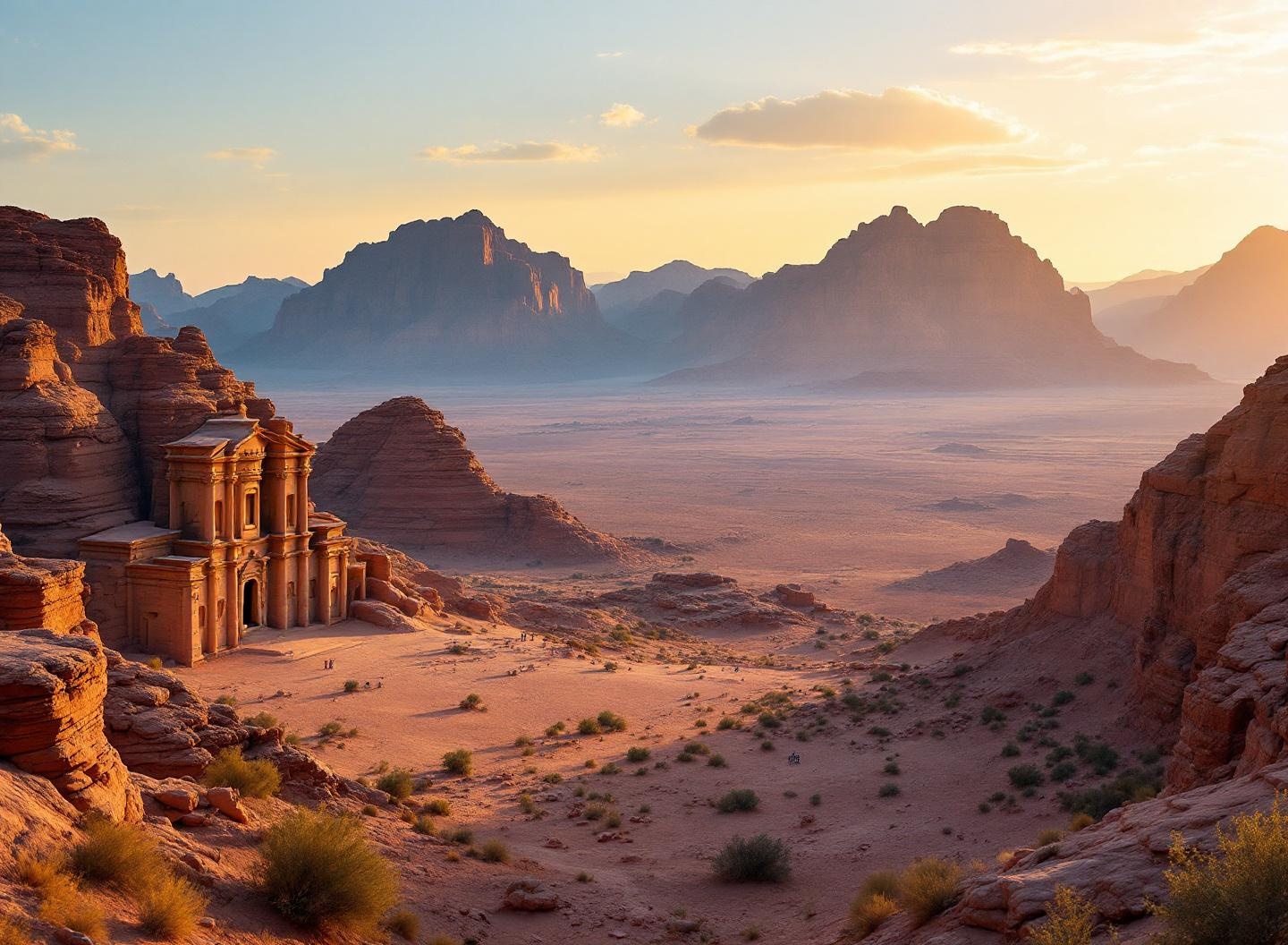
The honest picture
Jordan has a rainy season, and most travel content either ignores it entirely or mentions it in a single line — “December to February can be rainy” — before moving on to spring travel advice. We want to give you the complete picture, because the reality is both more nuanced and more interesting than a single-line caveat.
The short version: Jordan’s rainy season runs December to March. The rain falls primarily in the north and center of the country. December has the most consistent rainfall. Wadi Rum, Aqaba, and the south are largely unaffected. Petra has 1-2 properly rainy days per winter season. Flash floods are a genuine risk in canyon areas. And winter Jordan — for the right traveler, with the right expectations — is genuinely rewarding.
| Wettest region | Amman and the northern highlands |
| Driest region | Wadi Rum and Aqaba, year-round |
| Petra rain risk | Low — 1-3 genuine rain days per winter |
| Closed for the season | Wadi Mujib Siq Trail (November-April) |
| Upside | Lower prices, fewer crowds, warm low-angle light |
Region-by-region rain and temperature (December-February)
| Region | Rain days/month | Daytime temp | Notes |
|---|---|---|---|
| Amman & north | 12-15 (Dec) | 8-12°C | Most rain in the country; museums are a good fallback |
| Jerash | Moderate (30-40% any day) | Similar to Amman | Open-air site; pack a waterproof layer |
| Petra | 1-3/season | 12-14°C daytime, 2-4°C night | Cold is the real issue, not rain |
| Wadi Rum | Minimal | 15-20°C | Best winter stargazing conditions |
| Aqaba | Minimal (5-8mm/month) | 22-25°C | Warmest, driest option in winter |
Where the rain actually falls
Amman and the north
Amman receives the most reliable winter rainfall of any major Jordanian destination — approximately 12-15 days of meaningful rain per December, declining through January and February. The northern highlands (Ajloun, Salt, Umm Qais) receive even more — these areas can have genuinely wet, cold days with heavy cloud cover.
In practical terms: walking Amman’s outdoor sites in December involves some rain days. The Roman Theatre, the Citadel, Rainbow Street — all of these can be experienced in light rain, but heavy rain days are better spent in museums, restaurants, and the excellent indoor markets.
The Jordan Museum and the National Archaeological Museum are excellent rainy-day destinations. Both are world-class, undervisited by international tourists, and represent some of the finest archaeology-to-context display you’ll encounter anywhere.
Jerash and the north
Jerash in winter presents an interesting opportunity. The crowds — which in peak autumn season can genuinely disrupt the experience of walking ancient streets — are thin in December and January. On a clear winter day, Jerash with its Roman columns and empty colonnaded street is magnificent. Rain is a moderate risk: perhaps 30-40% chance of meaningful rain on any given December day.
The admission includes shelter if you need it — there are roofed areas in the museum complex. But rain in open-air ancient sites is largely unavoidable. A waterproof layer is essential.
Petra and the King’s Highway
Petra’s winter rainfall pattern is one of the most common misconceptions in Jordan travel.
Contrary to what many people assume, Petra does not have a wet winter. The city sits at 1000m elevation in a rain-shadow area. Average December rainfall in Wadi Musa (the town next to Petra) is approximately 50-60mm for the entire month — that is less than one Paris week in a normal autumn.
What this means practically: of the approximately 90 winter days (December through February), Petra has genuine rain disruption on 1-3 days. On the other 87 days, the weather ranges from perfectly clear (common) to overcast but dry (also common). Snowfall happens at Petra — it’s rare, perhaps once every 2-3 winters, but the images of the Treasury dusted in snow are real, and if you happen to be there when it snows, you have witnessed something very few people have.
The main Petra winter concern is cold, not wet. January nights in Wadi Musa can reach 2-4°C. The Siq in the early morning before the sun clears the walls is genuinely cold. Pack warm layers.
The King’s Highway connecting Madaba, Karak, and Shobak to Petra is the winter driving concern. In heavy rain, this road — which passes through elevated, mountainous terrain — can become slick. It is not dangerous if you drive carefully, but it deserves caution. Give extra stopping distance, go slowly around curves, and don’t attempt it in icy conditions (freezing at altitude is theoretically possible in January-February).
Wadi Mujib — closed, and for good reason
The Wadi Mujib Siq Trail — one of Jordan’s most spectacular hikes, a water canyon route through narrow walls with swimming, scrambling, and wading — is closed from November through April.
This is not a bureaucratic decision. The closure is a safety response to genuine flash flood risk. The canyon catchment area extends far beyond what’s visible from inside the gorge, and sudden rainfall many kilometers away can send a wall of water through the narrow channel with very little warning.
Do not attempt to enter Wadi Mujib’s canyon trails in the closed season. This is genuinely dangerous.
The RSCN (Royal Society for the Conservation of Nature) manages the reserve, and the path is physically blocked during closure. If you’re planning a winter Jordan trip, remove Wadi Mujib from your itinerary and substitute a hike in Ajloun Forest Reserve instead — our Ajloun forest hike guide covers a comparable canyon-adjacent walk that stays open year-round.
Wadi Rum and the south: largely unaffected
Wadi Rum sits in Jordan’s arid south, in the rain-shadow of the central highlands. Average annual rainfall in Wadi Rum is approximately 50mm — for the entire year. December, the wettest month elsewhere in Jordan, typically brings only 5-10mm to Wadi Rum.
What this means: winter is actually a wonderful time for Wadi Rum. Days are typically clear and sunny with temperatures of 15-20°C — perfect for jeep tours and hiking without the brutal heat of summer. Nights are cold (0-5°C in December-January, occasionally dropping below freezing), so sleeping in good-quality camp bedding matters. Most reputable camps provide this.
The stargazing is arguably at its best in winter — cold, clear air, no summer haze.
From Wadi Rum: jeep tour with overnight desert campingAqaba: largely sunny
Aqaba is Jordan’s most reliably dry city. The city sits at sea level, in a desert basin between mountains that capture rainfall before it reaches the coast. December in Aqaba means approximately 5-8mm of rain for the entire month — effectively nothing. Temperatures are 22-25°C by day, 14-16°C at night.
Winter Aqaba is, by many metrics, the best Aqaba. The summer heat (38°C+) is gone. The sea temperature (22-24°C) is cooler than summer’s 28°C but still comfortable for snorkeling. Visibility underwater is excellent in clear winter water. And the city empties of the summer domestic visitors who fill every beach chair in July.
The Red Sea winter is also excellent for diving — the lack of summer crowds, clearer water, and moderate weather make it a top recommendation from the dive operators we’ve spoken with. Our Aqaba diving guide covers site-by-site winter visibility if diving is the priority.
Practical rainy season advice
What to pack for winter Jordan
Waterproof outer layer: A breathable rain jacket is essential. Not a heavy parka — temperatures in Amman in December average 8-12°C, which is chilly but not extreme. A mid-layer plus waterproof shell handles most conditions.
Warm base layer: For early morning Petra visits (if you’re there in January, the Siq before sun-up is genuinely cold) and for Wadi Rum nights (where temperatures fall below 5°C).
Waterproof footwear: Not mandatory, but traction-sole waterproof boots or shoes are significantly more comfortable on wet limestone at Petra and wet cobblestones in Amman than trainers.
Umbrella: Compact and lightweight. More useful in Amman’s urban areas than in Petra’s hiking context.
Driving on the King’s Highway in winter
Give extra time, drive slowly on curves, and pull over if conditions deteriorate significantly. The road is paved throughout and well-maintained; the risk is wet curves and occasional ice at the highest elevations (above 1500m) in January.
If you are not confident driving in wet mountain conditions, consider bussing the Amman-Petra-Aqaba route instead.
Flash flood awareness
Flash floods in Jordan are not limited to Wadi Mujib. Any narrow wadi — particularly in the Dana area, in Wadi Hasa, and in the approaches to Petra via back routes — can flash during or after rain in the catchment area.
The rule: if rain is falling anywhere in your area, or if you can see dark clouds in the mountains above, do not enter narrow canyons or wadi beds. Move to higher ground. The floods move fast and with enormous force.
The Bedouin guides in Wadi Rum and the RSCN rangers in Dana are the best people to ask about current conditions. They take this seriously, and you should follow their guidance without argument.
Why winter Jordan can be excellent
We want to finish by making the affirmative case, not just the cautionary one.
Crowd levels: October and November are peak tourist months. December and January see a significant drop in visitors. Petra in January — on a clear, cold day — is quieter than it has been since before mass tourism. You can stand in front of the Treasury with almost no other people in your field of view.
Prices: Hotels, camps, and tours are cheaper in winter. Significantly cheaper — 20-40% less than peak-season rates at many properties.
Light: The winter sun in Jordan stays low in the sky throughout the day, producing warm, raking light almost from sunrise to sunset. For photography, this is exceptional. The Treasury at 2pm in January glows.
Fewer horses and vendors: The persistent hawking at Petra’s entrance is notably reduced in winter. Fewer vendors means fewer approaches.
Temperature: Walking Petra in January at 12°C is dramatically more comfortable than walking it in July at 42°C. The two-hour Monastery climb, which exhausts people in summer, is genuinely pleasant in winter cool.
For travelers flexible about weather and warmth — and willing to pack appropriately — winter Jordan offers a version of the experience that summer and autumn visitors rarely get. For a fuller seasonal comparison across the whole year, see our best time to visit Jordan guide, and if you’re specifically weighing winter against spring, the Jordan spring guide covers the trade-offs in wildflowers and crowd levels.
Wadi Rum stargazing overnight — dark, clear winter skies without summer hazeFrequently asked questions about Jordan rainy season real talk
Does it rain at Petra in winter?
Rarely. Petra has approximately 1-3 rainy days per winter season despite being in Jordan’s “rainy season.” Cold and overcast days are more common than actual rain.
Is Wadi Mujib open in winter?
No. The Siq Trail is closed November through April due to flash flood risk. This is a genuine safety closure.
Is Wadi Rum good in winter?
Yes. Wadi Rum is largely unaffected by Jordan’s winter rains. Daytime temperatures are comfortable (15-20°C), nights are cold, and the sky is typically clear and excellent for stargazing.
What should I pack for Jordan in December?
A waterproof rain jacket, warm base layers, and comfortable waterproof footwear. Layers rather than a single heavy coat — temperatures range from 5°C (Wadi Rum night) to 25°C (Aqaba afternoon).
Is winter a good time to visit Aqaba for diving?
Yes, often the best. Aqaba stays dry through winter, sea temperatures hold at 22-24°C, visibility is typically excellent, and the summer crowds are gone. The main trade-off is a slightly cooler water than summer’s 28°C, which is comfortable with a light wetsuit.